Well, this will be a short one. This is one of the phones I've had in my "input queue" for a relatively long time. The problem is that even though this is a touch phone, it's just a dumb phone with some proprietary software.
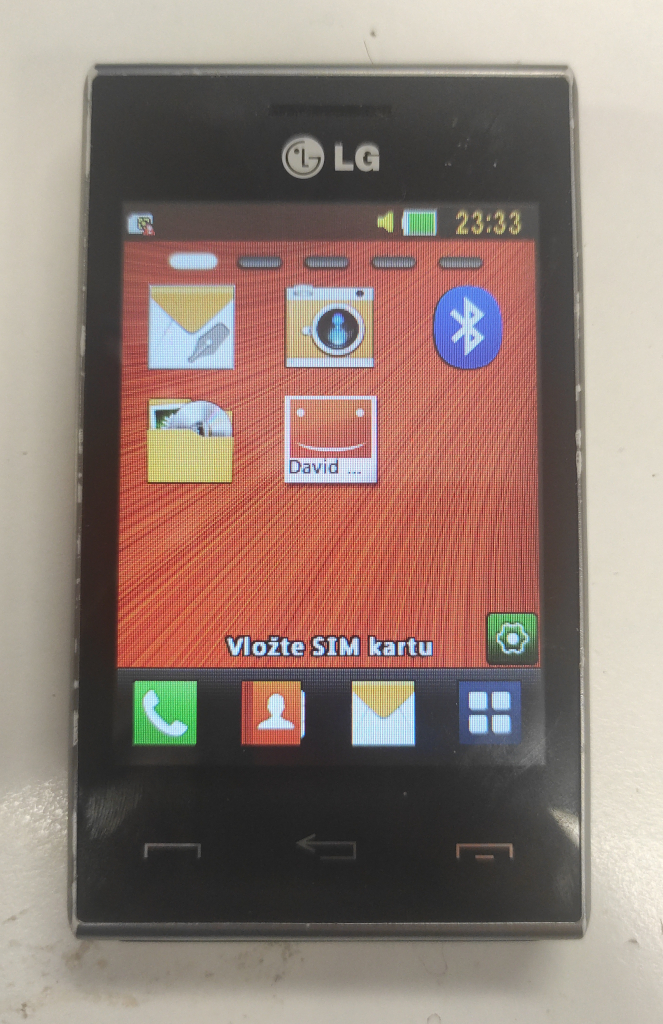
Honestly, I still can't understand the purpose of these phones. They have closed firmware with very limited or non-existent possibilities for installing or customising anything except the wallpaper. I can understand classic phones with a phone keyboard that can only be used for calling, writing text messages and setting calendar events. But who is the target market for this kind of touch phone that can do the same thing? When you want a touch phone, you probably want a multipurpose phone. And when you want a basic phone, it's definitely more practical to have a standard phone keyboard. Does anyone know of any practical uses for these phones?
Continue reading →
This phone is from the era when Alcatel was trying to make a comeback. It's a phone from the era when Alcatel wanted to be reborn. Personally, I really liked the Onetouch Fire series, which attempted to bring Boot to Gecko to mobiles — a nice idea that I really liked. However, neither Firefox nor Android phones helped Alcatel gain a serious market share.
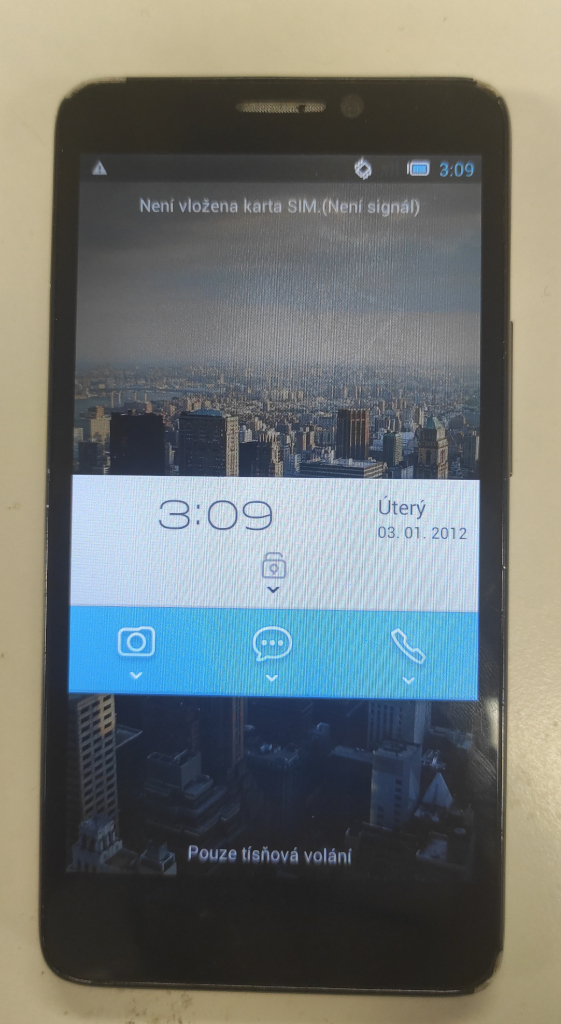
However, I also got today's phone as a present from my friend Tom. This phone was released in 2013 and came with Android 4.1. Based on my brief research, the reviews were quite good. It was a mid-range phone with a fairly good display and high-quality manufacturing, especially the back, which looks like brushed metal even though it is plastic.
The mismatch between my experience and the articles I read from 2013–14 is the system. The articles are about a very clean version of Android, where Alcatel made minimal changes compared to other manufacturers.
However, the first time I took this phone in my hands and turned it on, I could hardly believe that it ran on Android. The first thing I noticed was that it booted from power-off to a usable state in ...
Continue reading →
This phone was one of the many gifts I received from my friend Tom. I really like phones with QWERTY/Z keyboards as I can't write quickly enough on touchscreens. That's why I'm now using the Titan 2 as my primary phone.
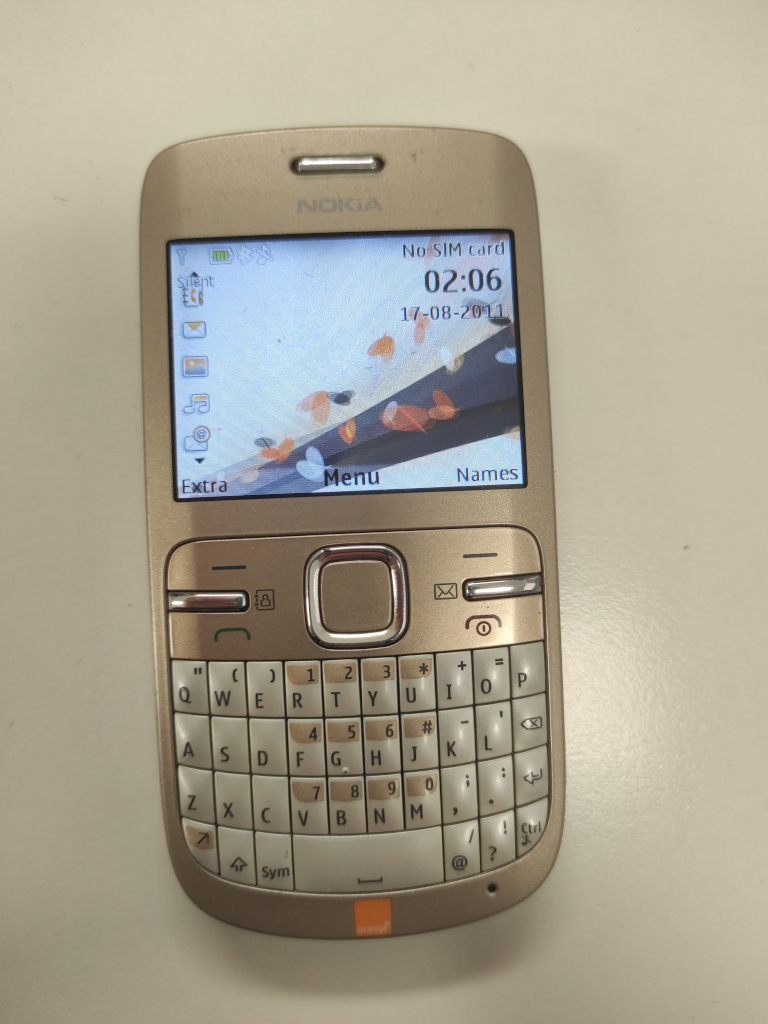
The interesting thing is that, despite its premium appearance, this was actually a low-end phone. It came with the "dumb" S40 system, which had already been on the market for a couple of years. This means that the only apps you can install are J2ME, and there aren't many of those because of the very unusual display for 'dumb' phones.
Also, the lack of multitasking is a major drawback mentioned in many reviews. This would be a really useful feature for a phone designed for chatting. For example, being unable to minimise the IM just to read emails or check another IM is just frustrating.
There was also another rare problem. This phone had bent display corners, which became popular only a year or two ago, before everyone realised it was a even more stupid idea for touch phones.
The problem is that when the surface is bent, the corners display a lot of reflections, which don't look very ...
Continue reading →
Well, it was just supposed to be another test of free LLMs. I opened Claude AI and described how a simple, SimCity-like game should work. I gave him some exact instructions and let him code an Android app. After providing him with instructions, checks and feedback, I achieved a fully functioning proof of concept in a few days.
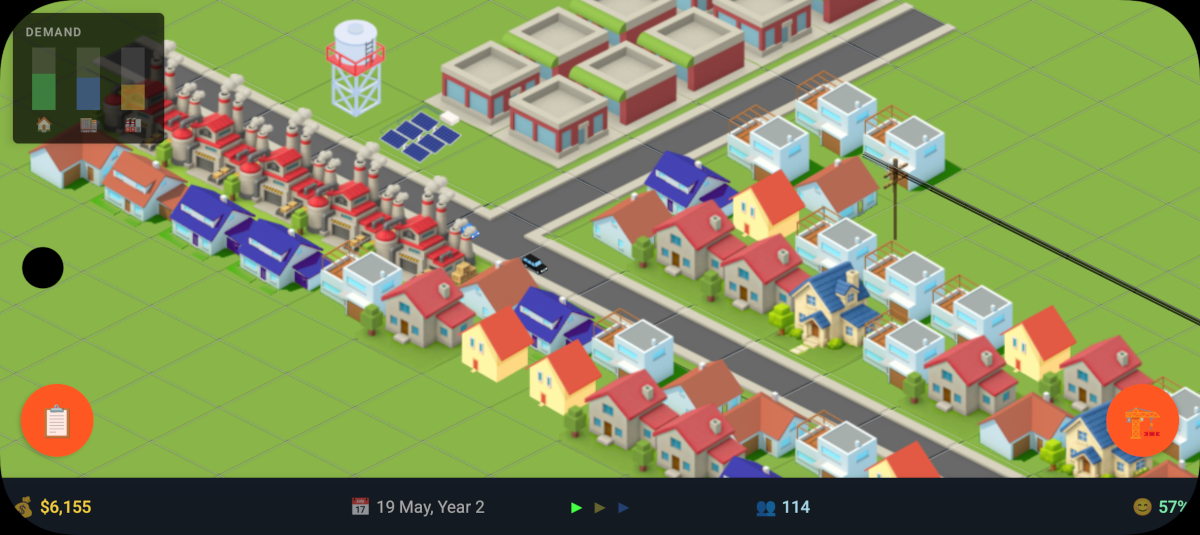
This is what it looks like now. It's really nice! This state was supposed to be the final one. However, I really enjoy the game and like how it looks, so I'm in a dilemma. Should I continue working on it alone, or just give up? It is actually on the limit of what the LLM can do, as it has become too complex and the code has grown too much. Now, even small adjustments kill the whole context, and it is almost impossible to make any progress.
So, what do you think? Should I finish it on my own and release it?
Continue reading →
I got this phone from Mr Logout. I didn't hesitate, as ZTE was similar to Xiaomi in its early days. It was a kind of Chinese "lovebrand" that offered cheap phones with fairly good hardware. But then it disappeared.
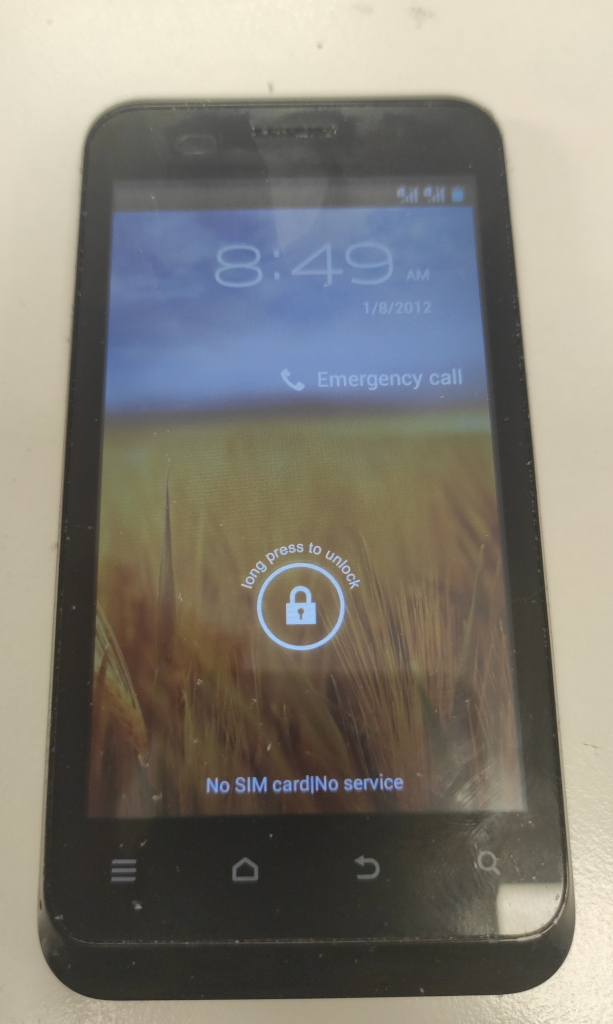
To be honest, it didn't disappear at all, but it doesn't make so many phones, and I haven't seen anyone with a ZTE phone in the last seven years.
So, here's the Blade C V807. It dates from 2013 and has a fairly average display for its time with a resolution of 480 x 800 pixels. It runs on Android 4.1 and has a dual-core Cortex A9 processor.
The advantage is that there is quite a lot of storage available to the user. A bit more than half of its built-in 4 GB. This was a very good amount, as many low-end phones had very little internal memory available, so it was very tricky to fit in the necessary apps. The 512 MB of RAM aren't really bad either.
The phone isn't amazing, but it's not bad either. The UI is quite smooth, even after all these years, and I could see myself using this phone as my daily ...
Continue reading →
Well, I really like Symbian phones. Even though most people hate them, I really enjoyed that era. I spent a lot of nights flashing custom systems and unbricking devices that I had bricked while flashing. It started with my Nokia 5230, the first phone I bought with my own money, and continued with many more devices.
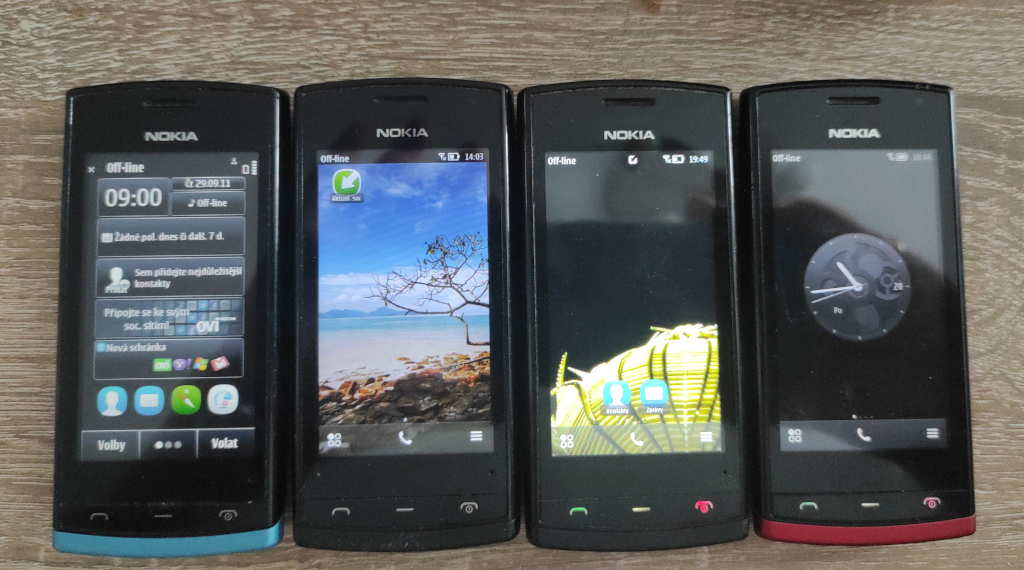
But I suppose that this got out of hand. Thanks to a series of coincidences, I now have four almost identical Nokia 500 phones. I was writing an article when I had three of these, but as you can see, the collection is still growing.
The problem is that even though the phones are practically identical, I like the fact that they are completely different when you turn them on. They have different OS versions — some old, some new, and some modified by phone operators — and it's interesting to see the differences.
However... Is it worth keeping them all? No, it's not. But would I get rid of some? I don't think I'd be able to overcome my OCD and compulsive collecting to get rid of at least one.
Continue reading →
Well, I'm not particularly proud of it, but I managed to fix the internal sound by placing a precisely shaped piece of aluminium foil over the headphone port.
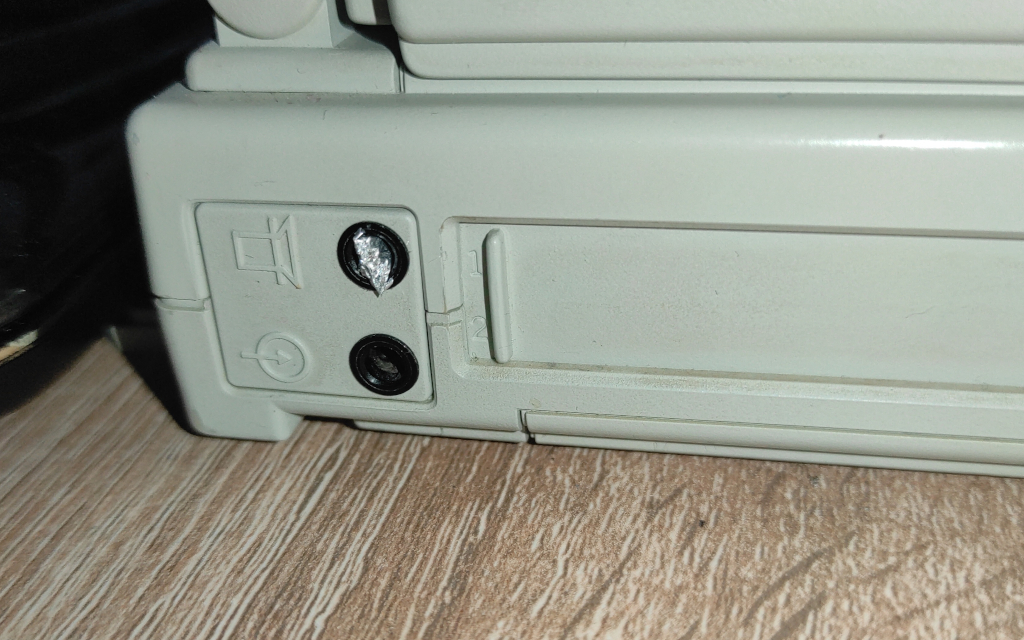
At first, I thought a pseudo-button needed to be pressed, but the problem was solved by short-circuiting two contacts inside the jack. It took me a while to create the exact shape of the foil to short-circuit just the pins I needed, but I finally did it. I don't think I'll touch it while it works. Now, I'm going to do some retro gaming!
Continue reading →
So, another step towards making that machine work the way I want it to. It's not perfect yet, but I finally made progress with the sound. I failed to set up any relevant original drivers as there was always a problem. However, I was advised to use a more up-to-date utility called Unisound. After initial problems when the utility reported an inability to detect any device, I asked for advice again, and the solution was to run it with the /nopnp switch.
Now, the system correctly detects the sound card. But I am still facing problems. This time, however, it is possibly a hardware issue rather than a software issue.
The sound works perfectly when the jack is plugged in. Sound goes to the headphones without any problems. However, I am struggling to get the internal sound device to work. The problem is that when I semi-unplug the jack and press the top of the notebook jack connector slightly, the internal sound starts working magically. The next step is to find a way to make the sound work properly without this glitch. I must find out what the semi-plugged jack does. Is it just a detector switch being pressed or is it ...
Continue reading →
Well, it's 1–0 to Nixdorf. I'm giving up on the idea of getting Windows 98 or 98 to work there. However, I did manage to get MS-DOS 6.22 working, so I burned the working DOS onto a CF card and also found 300 MB of interesting games. I put the M602 there and made it autoexec. Everything seemed to be working. Some games worked, but none of them had sound. I tinkered with the interrupt and address settings, but unfortunately I was not able to get it working. While tinkering with the sound, I unfortunately pressed the combination that suspends the PC to disk. It did it, but after turning it on again, it got stuck in recovery mode. I had to perform a hard power-off, and after that, DOS was unable to boot again. I have now made the CF card bootable and working again, which was a long process. After all that, I made an image of the whole prepared CF card to have a backup plan in case I mess something up. Now I can tinker with the sound and try again and again until the sound works.
Continue reading →
I bought this old notebook a few days ago without a power supply. Fortunately, even though the sticker on the bottom of the device says something about a 22.5 V power supply, the notebook can run without any problems with voltages ranging from 12 V to 25 V, and it has a very standard connector. Fortunately, there was no problem supplying it.
It came with a 500 MB hard drive and Windows 98 pre-installed. However, the system was incredibly slow and booting alone took about 20 minutes. Initially, I wanted to install a fresh system on the old drive, but I immediately found out that this would not be possible because transferring the 1.4 MB DOS floppy image took an hour. Also, the drive overheated after a few minutes of intensive deleting or writing, so I realised it was almost certainly dead.
So I chose to take a step that I did not really like. I replaced the drive with a CF card in an IDE-to-CF adapter.
But the problems didn't end there. I tried many approaches to burn existing Windows 95 or Windows 98 HDD images, but they all failed to boot. I also tried setting up DOS on the drive with ...
Continue reading →